Immersive AI with Watson
Nov 14, 2018
4 min read
Last week our spatial experiences design team was selected to host a tour in our lab as part of Austin Design Week. ADW is a week-long fête focused on the innovative creators and designers in the local community, and we were chuffed to open our lab to +65 Austin creatives from the public for the first time.
Our lab creates the immersive experiences that are the heartbeat of the Watson Experience Centers — these spatial applications leverage Watson’s core abilities and APIs inspired by IBM’s industry-specific products and are evolving to our ever-changing business and global landscape. We combine the real-world capabilities of Watson with a smidge of the art of the possible — what can we do in 2 years vs. 5 years.
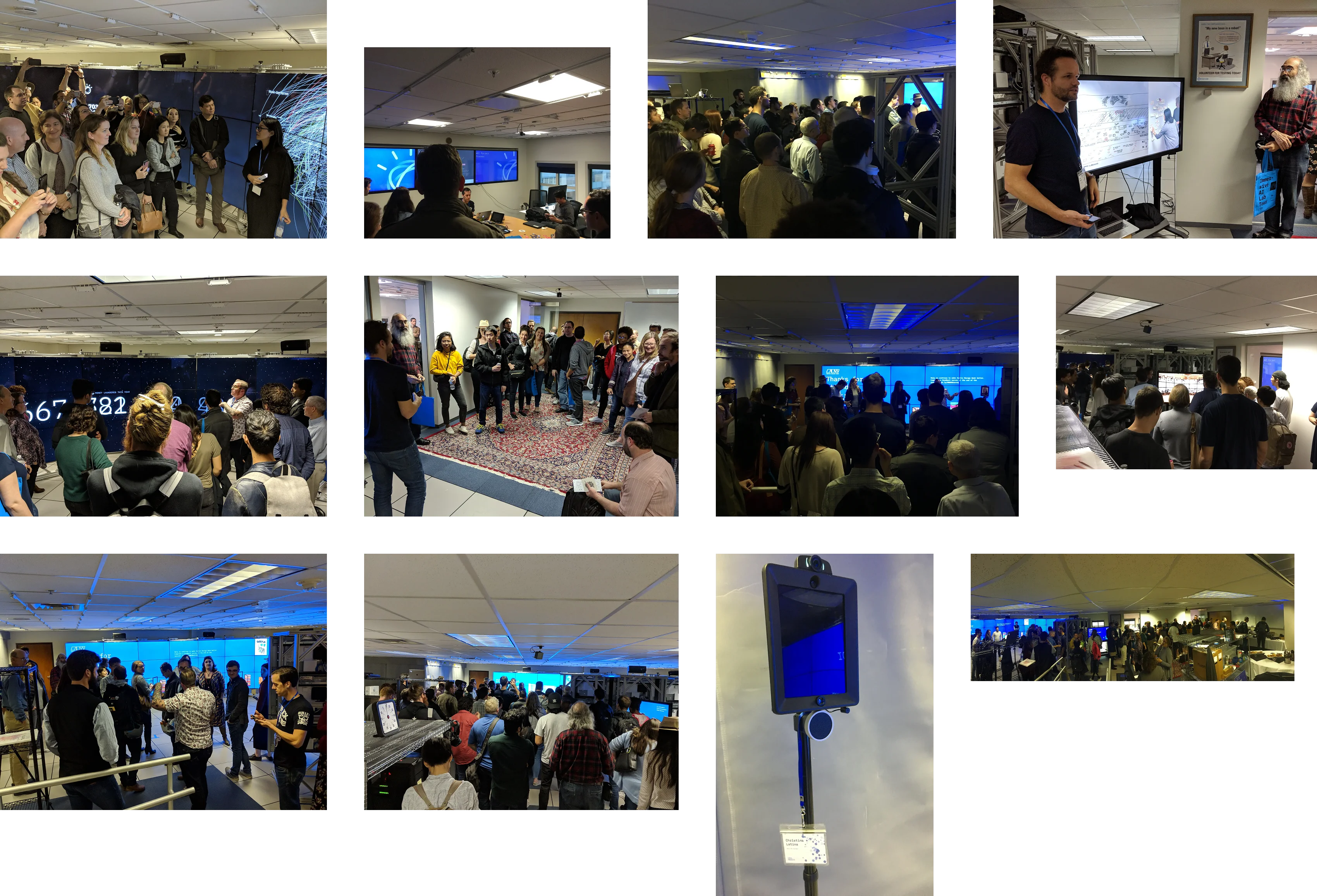
The lab has long had a closed-door policy, but at the beginning of 2018, we dedicated ourselves to enable our co-workers and the design industry to experience and understand the unique challenges of designing spatial apps and how we tackle designing with Watson.
Socializing AI — making technology human
To tell the story of Watson, we look to our history for inspiration, Ray and Charles Eames iconic work at the World’s Fair — two visionary designers who created exhibits that told of the partnership between computers and society.
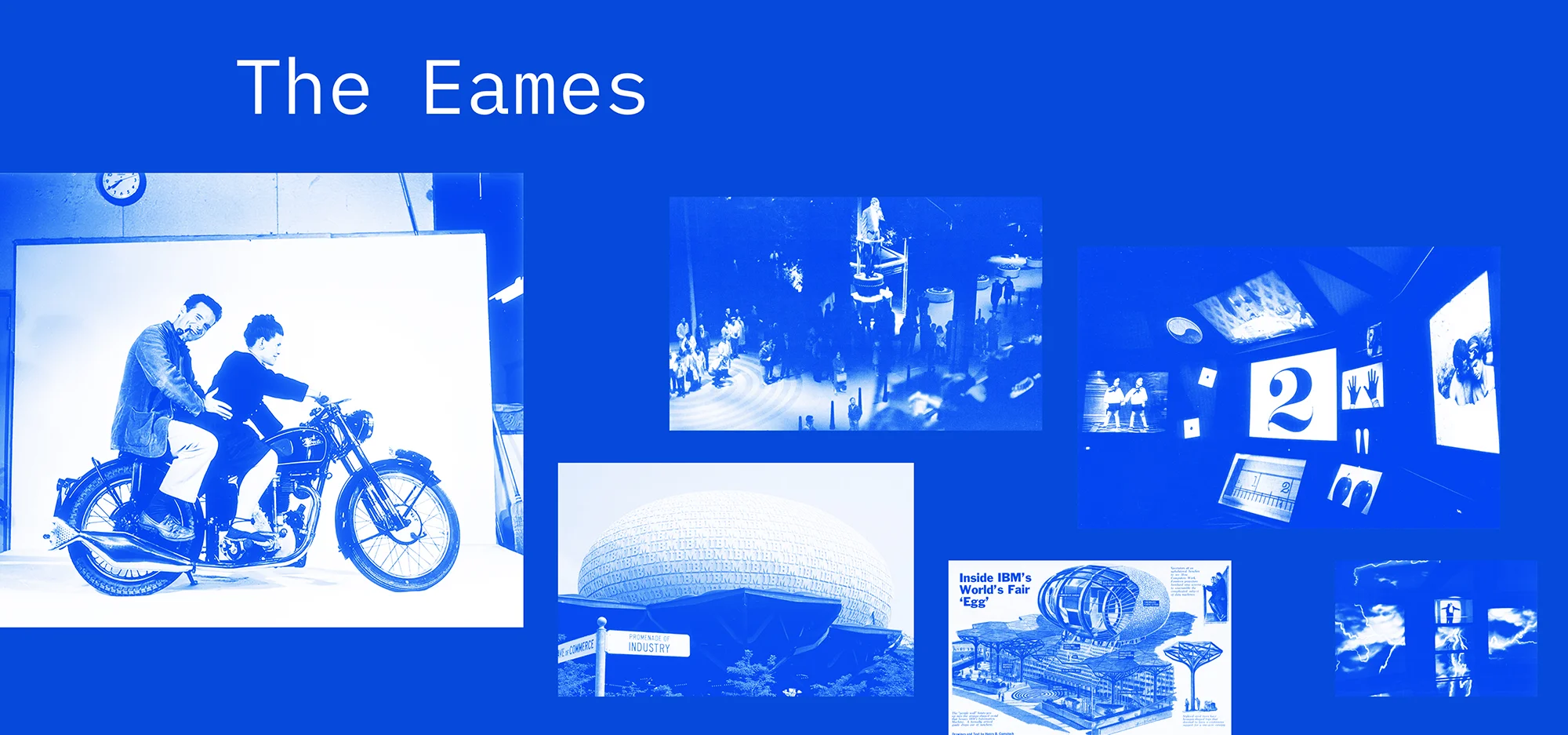
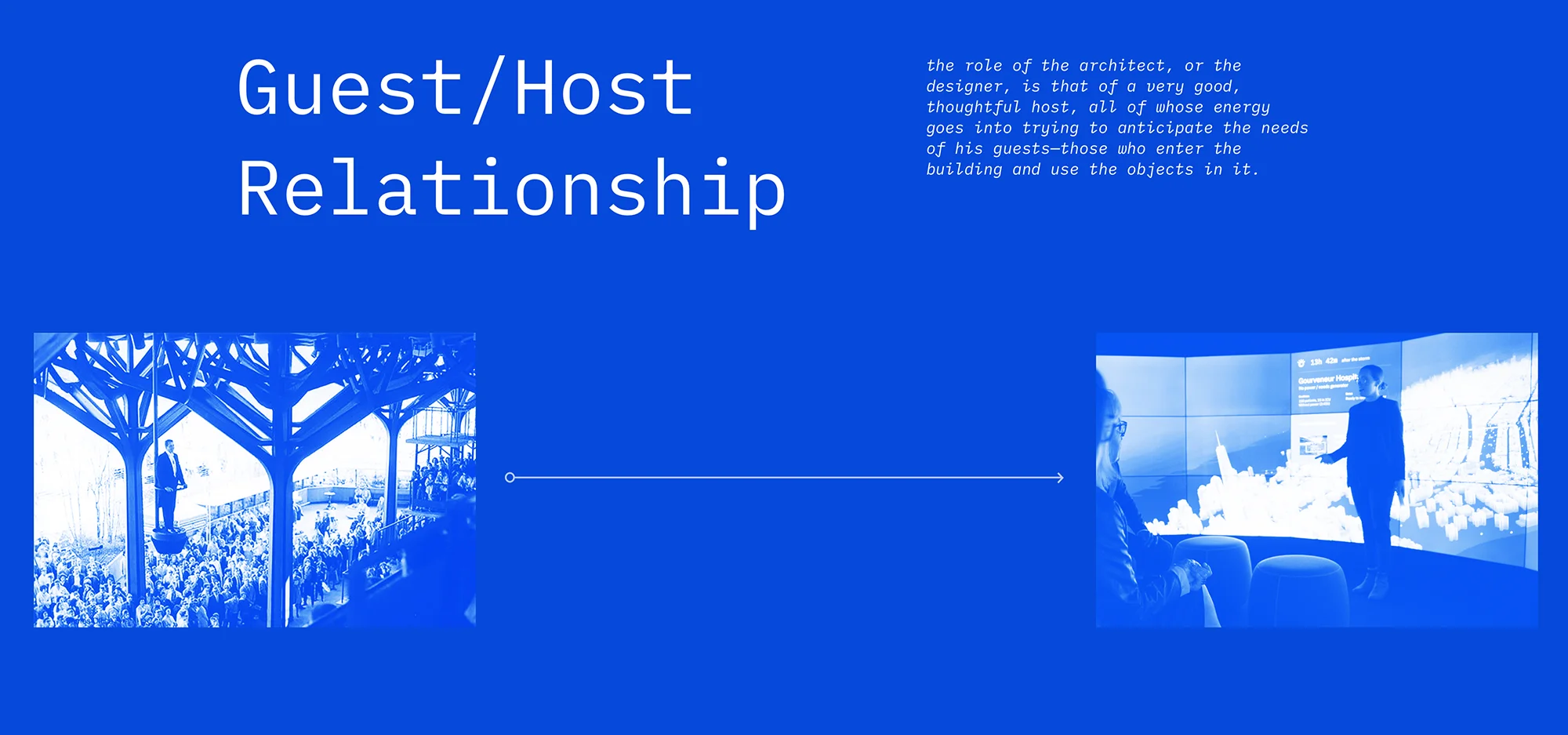
During their work on the world’s fair the Eames created two artifacts that influenced the creation of the Watson Experience Center — allowing us to understand the capabilities and benefits of computers have on society by immersing an audience in a demonstration of the technology and to present those ideas with humanity at the core — the host/guest relationship.
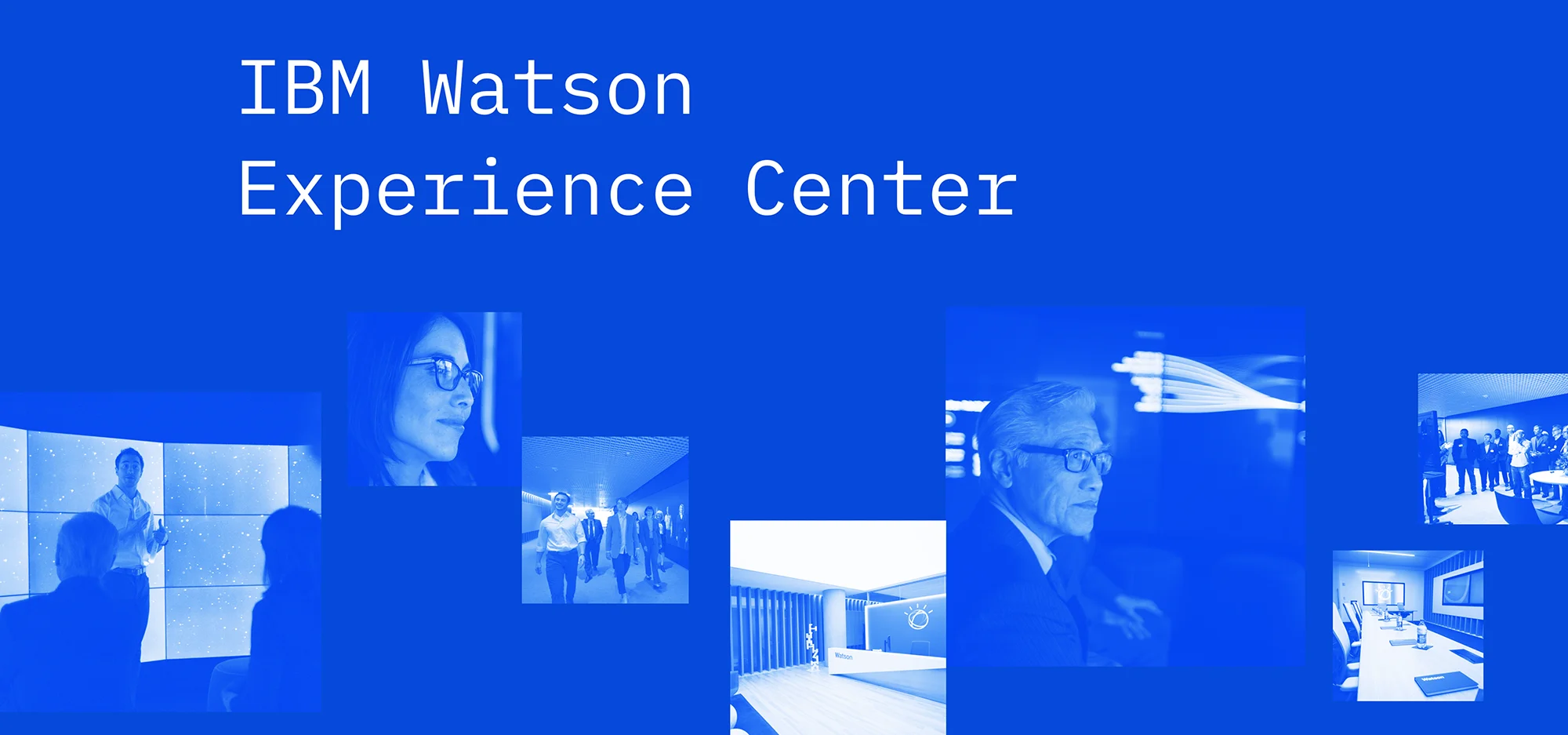
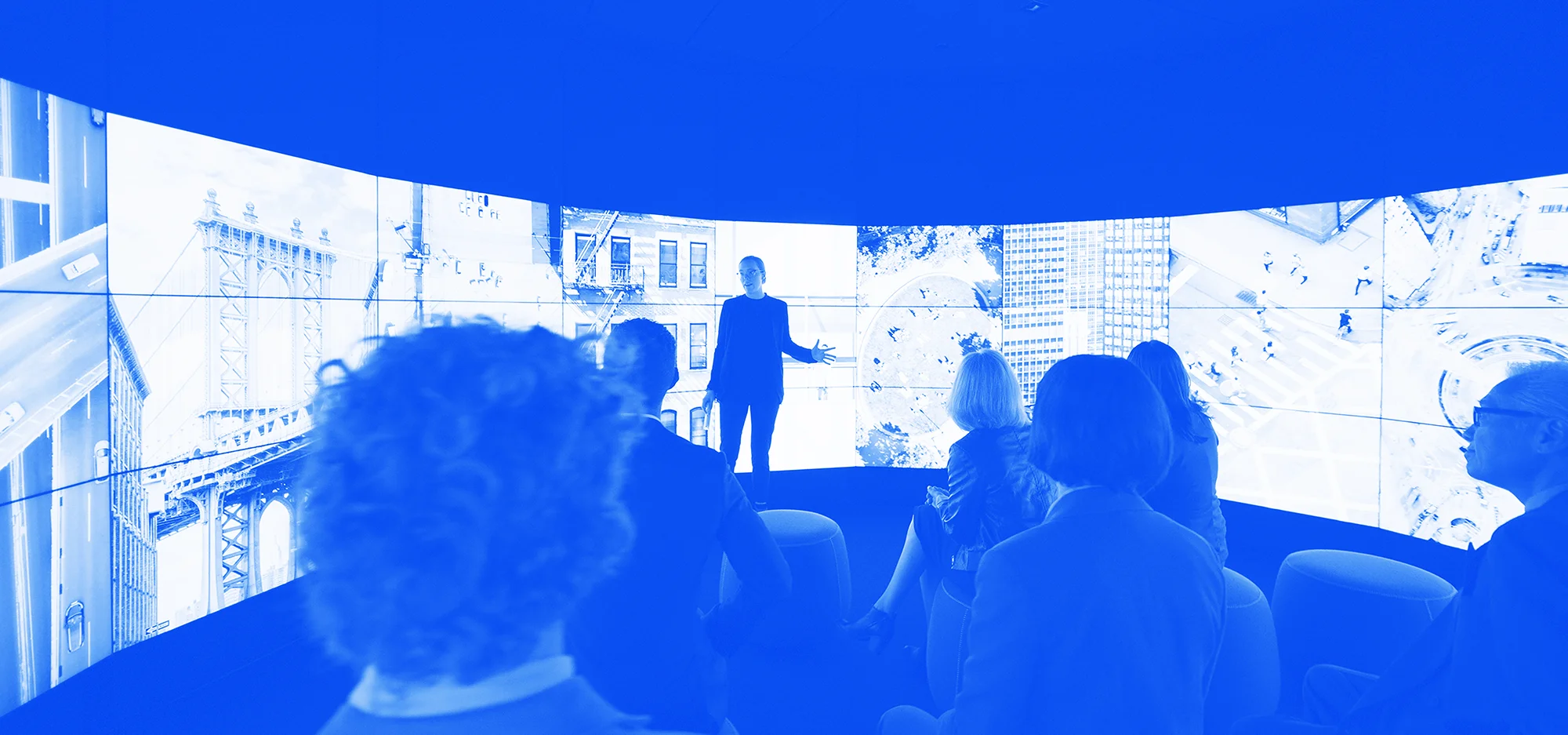
The Eames’ work inspired the creation of the Watson Experience Center. The first center opened in New York in 2014 — and now with additional locations in San Francisco and Cambridge. The centers are an interactive meeting space where clients, researchers, and students learn about Watson and AI within a gesture-based 290° immersive space and an interactive 40' wall with expert-guided interaction — a human perspective to guide visitors.
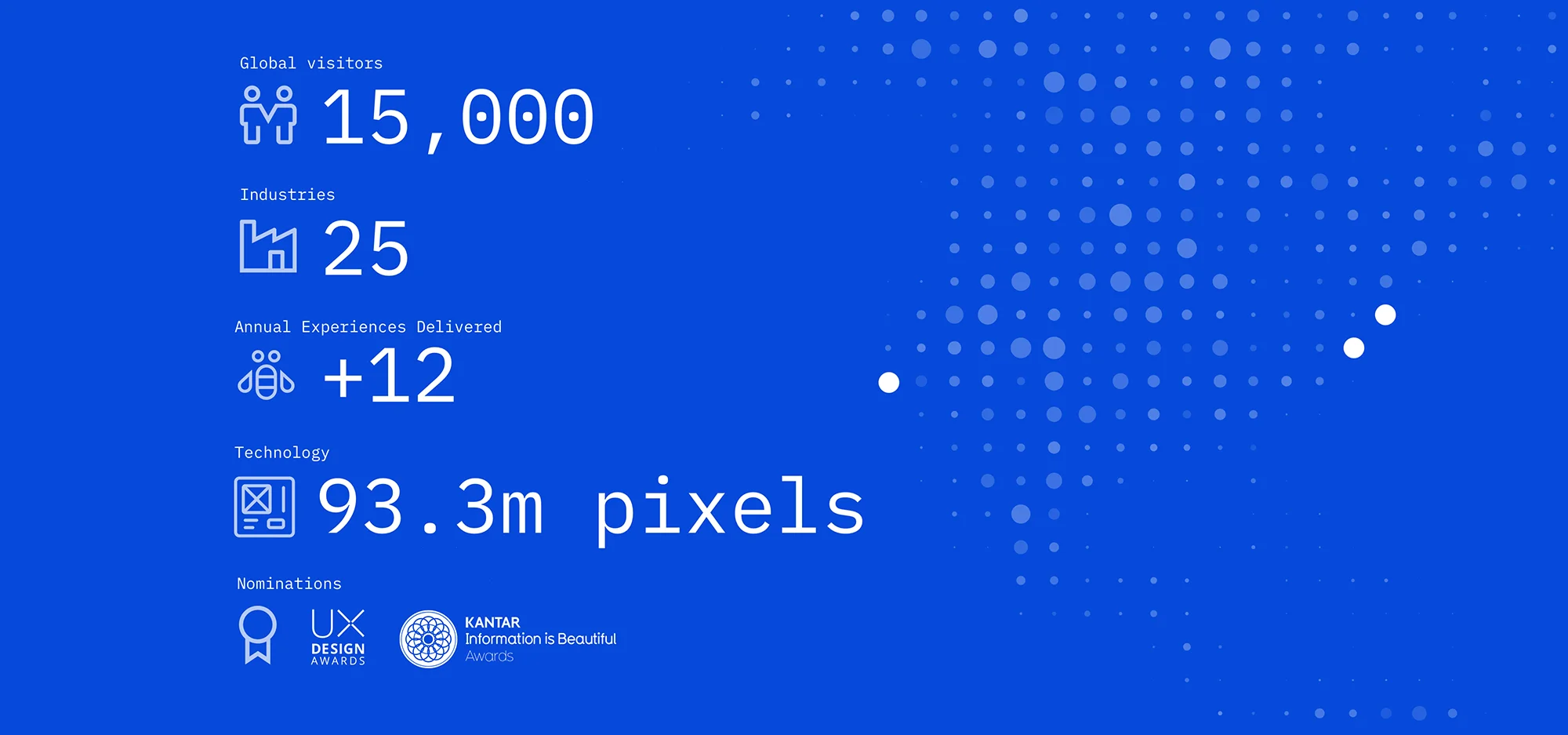
The Watson Experience Centers share the story of an evolving IBM to over 15,000 C-suite visitors annually across all of IBM’s industry verticals. Our award-nominated work demonstrates how our partners are transforming themselves and our world with AI — putting Watson to work today.
Creating worlds — not products
Designing for such a unique form factor has its challenges — how do you prototype and design to such a massive interface? How do you enable visual design teams to test assets and iterate quickly? How do you QA and test applications when you accustomed to working on a 15" laptop?
That is the very purpose of our lab — it allows us to collaborate with a team located across the world — from Paris to New York, Austin and Los Angeles — we can develop, design and test at scale in a dedicated space without taking any of our client centers offline.
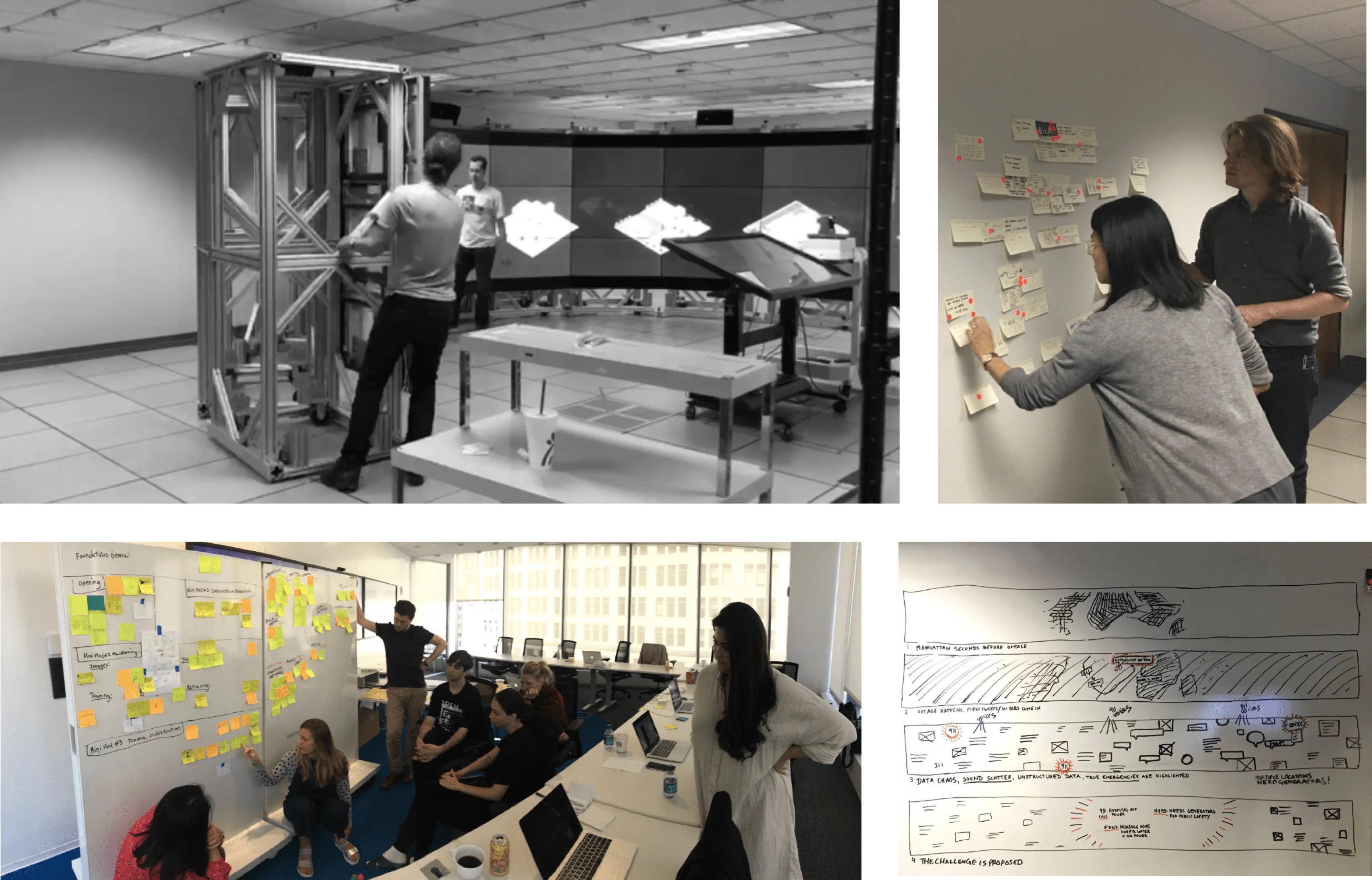
The dedicated lab allows colocation of our teams during the initial creative process when we are kicking off new work. Our creative process is very much the same as many others teams — we spend time researching the industry or product we are featuring and working with IBM teams in the trenches working on the products, during which we brainstorm and white-board high-level concepts. We tease out of that information and data the insights we can deliver with AI — we always have to balance the wow and visualizations against the real impact and changes we create with Watson — always deliver insights, not visualizations.
The access to the immersive spaces allows us to quickly move on to validating data with Watson, prototyping UX interactions and exploring data visualizations with Processing, all at scale — making the best use of our 290° 93.3 million pixels.
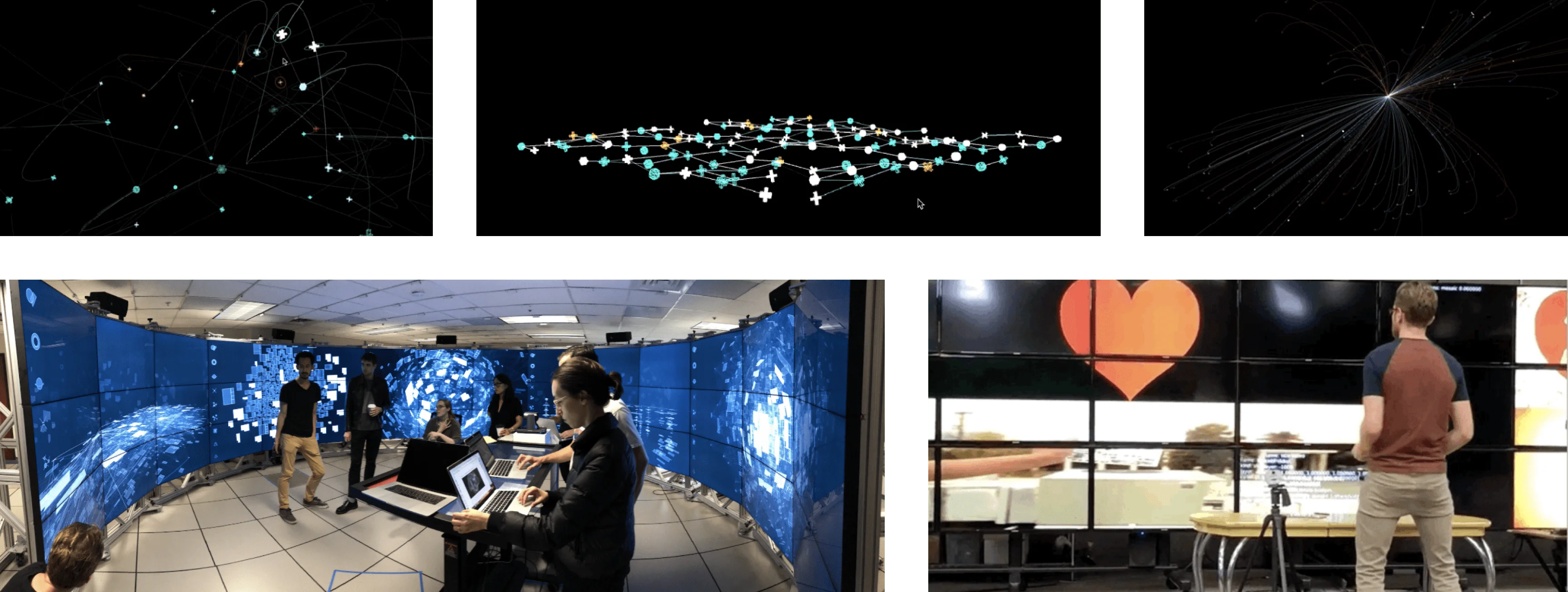
We continually iterate on the visual design of the apps while the development team begins transforming the storyboards and prototypes to real-time applications that leverage live data streams and directly call Watson APIs. During this time we are continually validating our data and pivoting as Watson inevitably delivers a surprising insight or uncovers a trend we did not anticipate.
No designer is an island
I think the most exciting part about getting the opportunity to share our team’s work at Austin Design Week is that fact that we work at such a fascinating intersection of high-technology and creativity. This space is very nascent we have the unique opportunity to combine our abilities as storytellers with coming up with rules we go while immersive, virtual and augmented reality emerge. Helping designers get a sense of the creative world outside of themselves is a fantastic feeling.
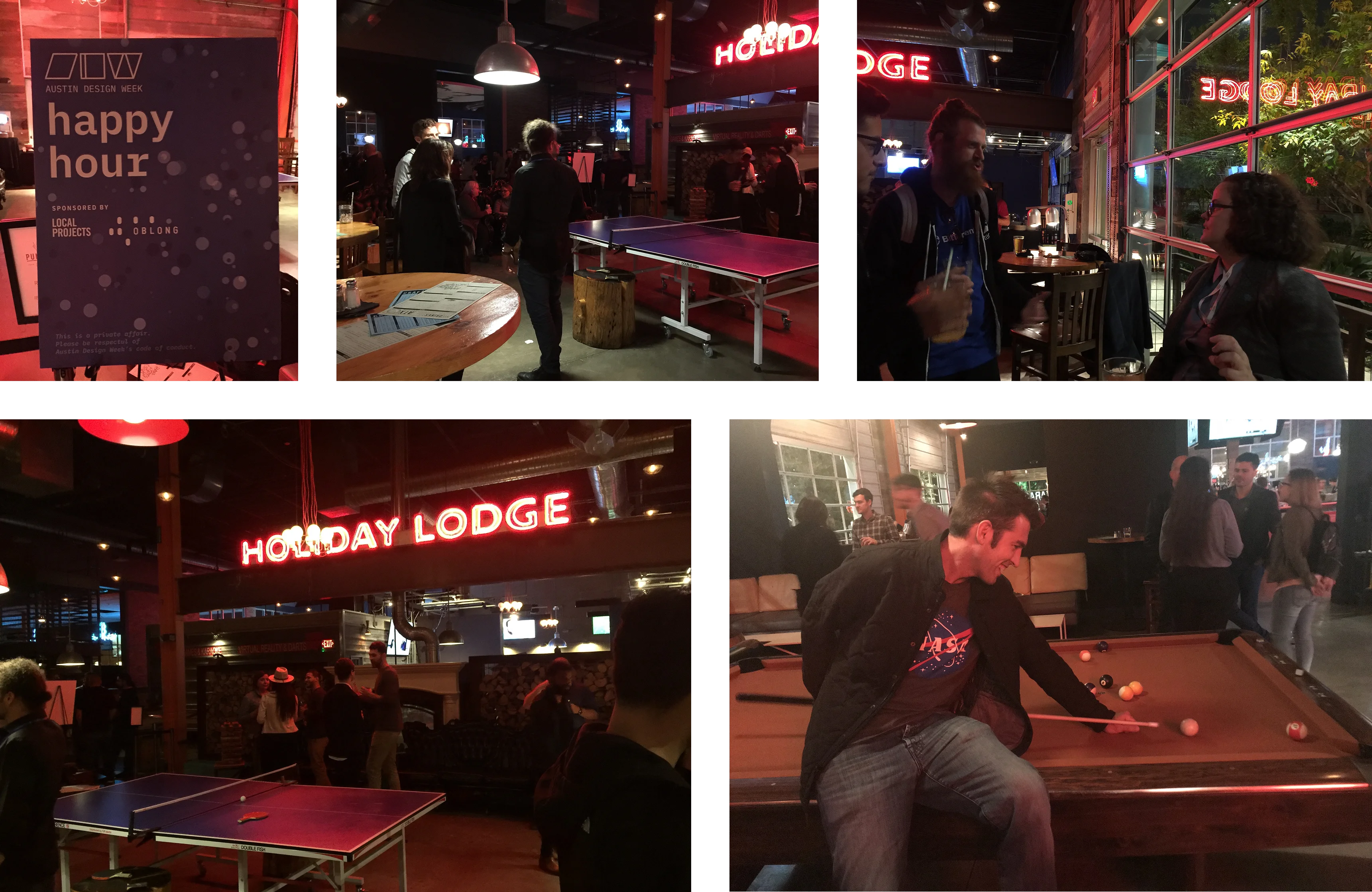
During the happy hour after the event, a conversation came up about how we got here — other than not really knowing how — I think the best way to answer that is to be a sponge constantly sucking up knowledge around you. As a kid from a one-light town whose first job out of school was animating furry animals — I got here by pursuing the things I am passionate about — design and technology.
I get to learn from some of the smartest people in the world at IBM who explain extraordinarily complex things in a way I understand. I get to ask folks who are leaders in their industries mundane questions about how they would do something. I get to spit-ball creative ideas that use AI and 93.3 million pixels.
I guess — long answer short — I wanted people to walk away with the fact that in the design world your opportunities are almost boundless and if you are passionate about something let that passion guide you. It can change and meander but as long as you are doing work you love it will show.
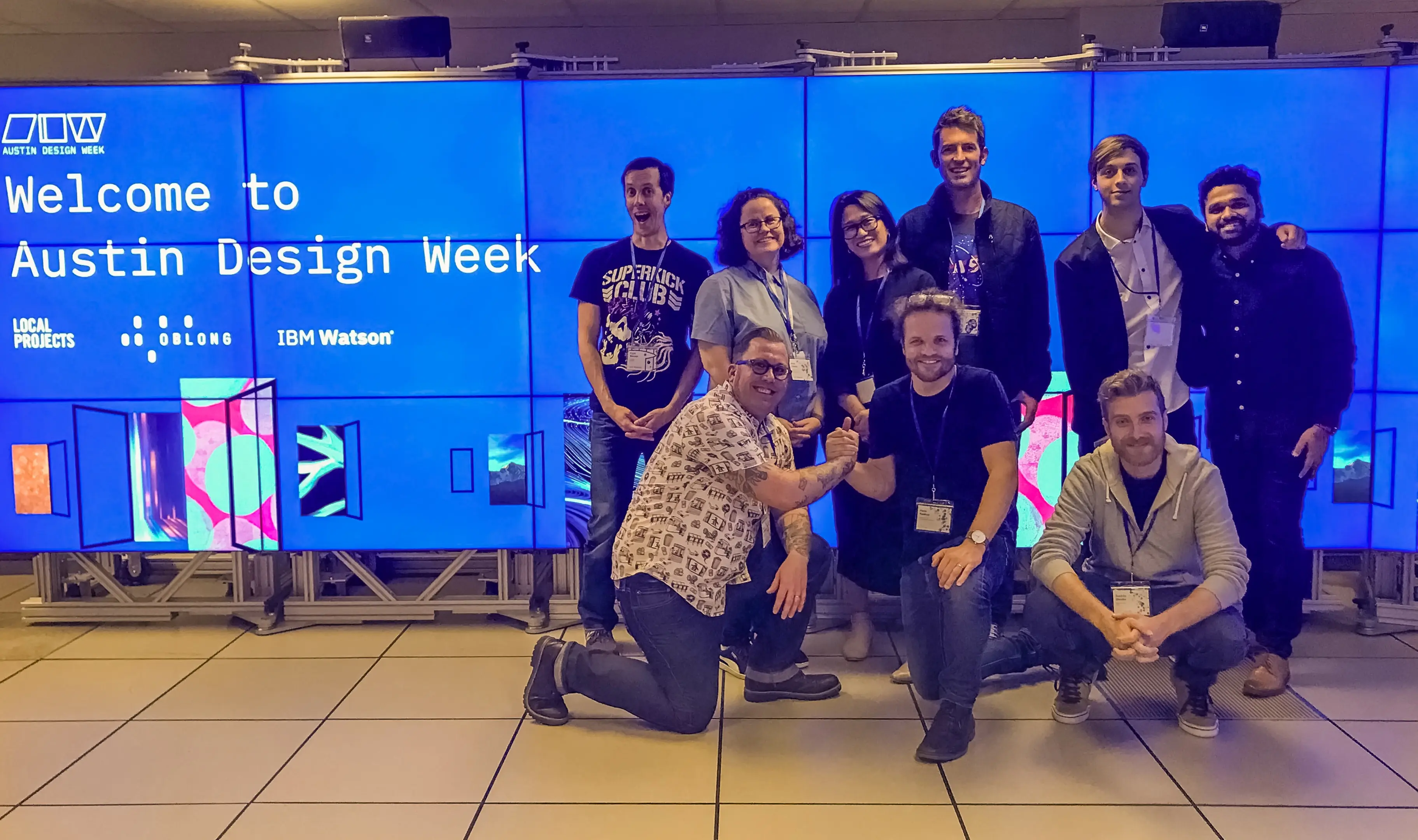
Left to right (Fred Benson, Anna Chaney, myself, Jenny Woo, Pete Hawkes, John Carpenter, Myles Bryan, Justin Shrake, and Sachin Shinde)
Special thanks to all my partners in crime at the ADW event — my co-workers at IBM — Jenny Woo, Anna Chaney, Fred Benson and Sachin Shinde — Pete Hawkes, John Carpenter, and Justin Shrake from Oblong Industries —Christina Latina and Myles Bryan from Local Projects.
—
This private publication is not affiliated with my employers or professional associations. Personal blog, personal opinions. Not speaking for anyone but myself. ✌️
Back
←